Aseer Architecture: Towering Aesthetics Reflect Builders' Skills and Adaptation to the Environment
Marking World Architecture Day at the start of October, Aseer Region highlights part of its architectural heritage, where mountains served as building materials and their terrain formed the basis for architectural design.
Traditional architecture in Aseer stands as an example of the deep interaction between people and their environment, with stone and mud buildings rising along the slopes, some extending several stories.
The Saudi Architecture Map shows that Aseer is home to diverse architectural styles, including the architecture of the Abha highlands, the Sarawat Mountains, the Aseer Escarpment, the Tihama foothills, and the Tihama coast.
One of the most prominent features of traditional Aseeri architecture is its tendency toward verticality, as builders made use of the limited space available in mountainous environments and turned to vertical construction.
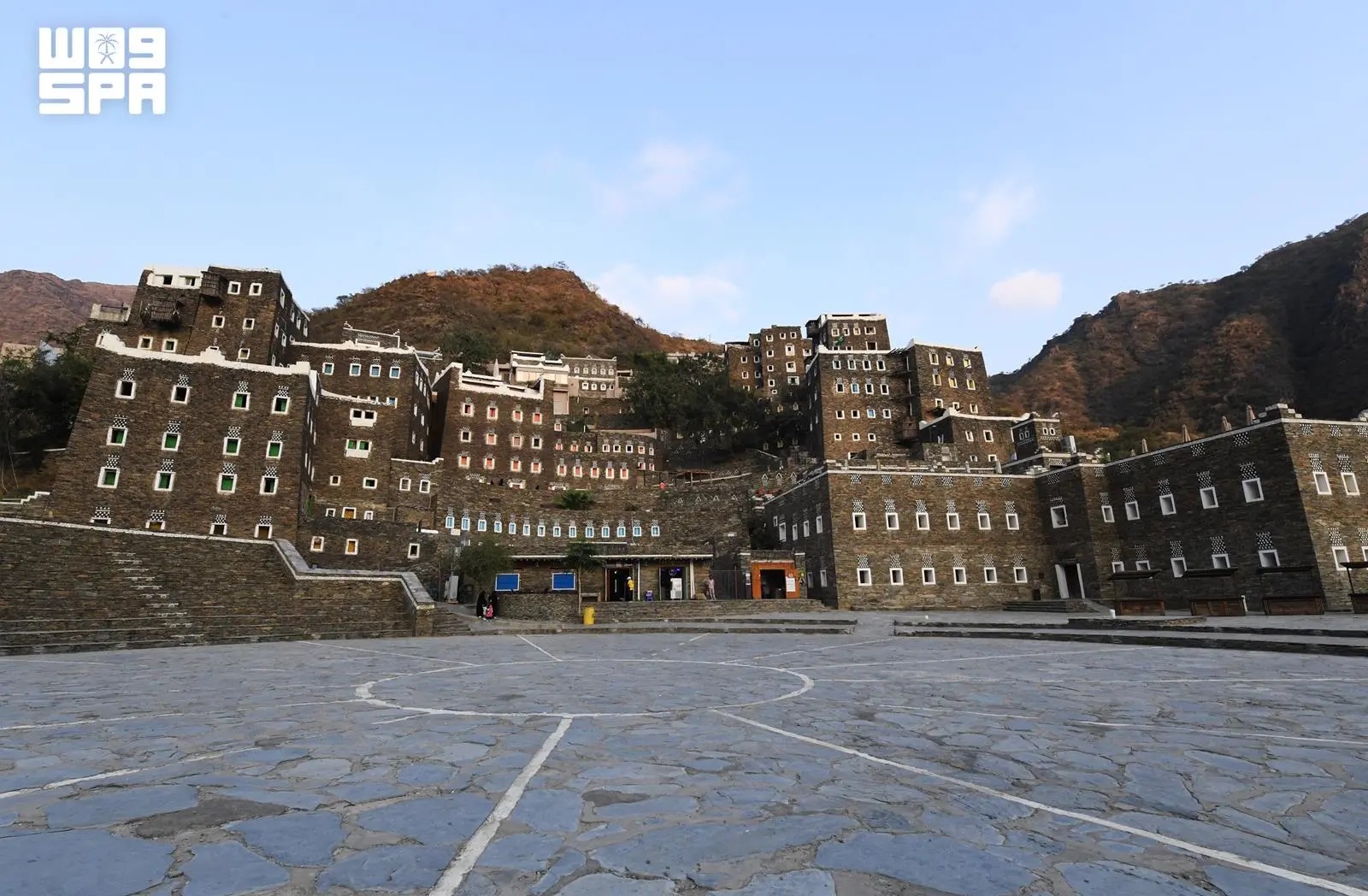
The town of Rujal in Rijal Almaa Governorate is one of the most prominent examples of historic architecture. Heritage sources indicate that some of its buildings are more than three centuries old, constructed from stone, mud, and wood, with some reaching eight storeys in height.
These functions are also reflected in the qasabas (watchtowers), which formed a prominent element of Aseer’s urban landscape. They were built in elevated locations to monitor roads and the entrances to villages.
In different parts of the region, particularly the Aseer Escarpments, tall stone towers with a fortified appearance can be seen, some reaching six stories.
Builders made use of materials available in the local environment, with stone serving as one of the main building materials in the Sarat and Rijal Almaa areas, alongside mud, which was used in walls and some structural elements.
Creativity was not limited to stone and mud, as traditional woodworking helped complete the identity of the buildings through doors, windows, and ceilings, drawing on inherited decorative patterns that intersect with the aesthetics of Islamic art.
Art also extended into the interiors of homes through Al-Qatt Al-Asiri, a traditional art associated with decorating walls and interior spaces.
In 2017, UNESCO inscribed it on the Representative List of the Intangible Cultural Heritage of Humanity.