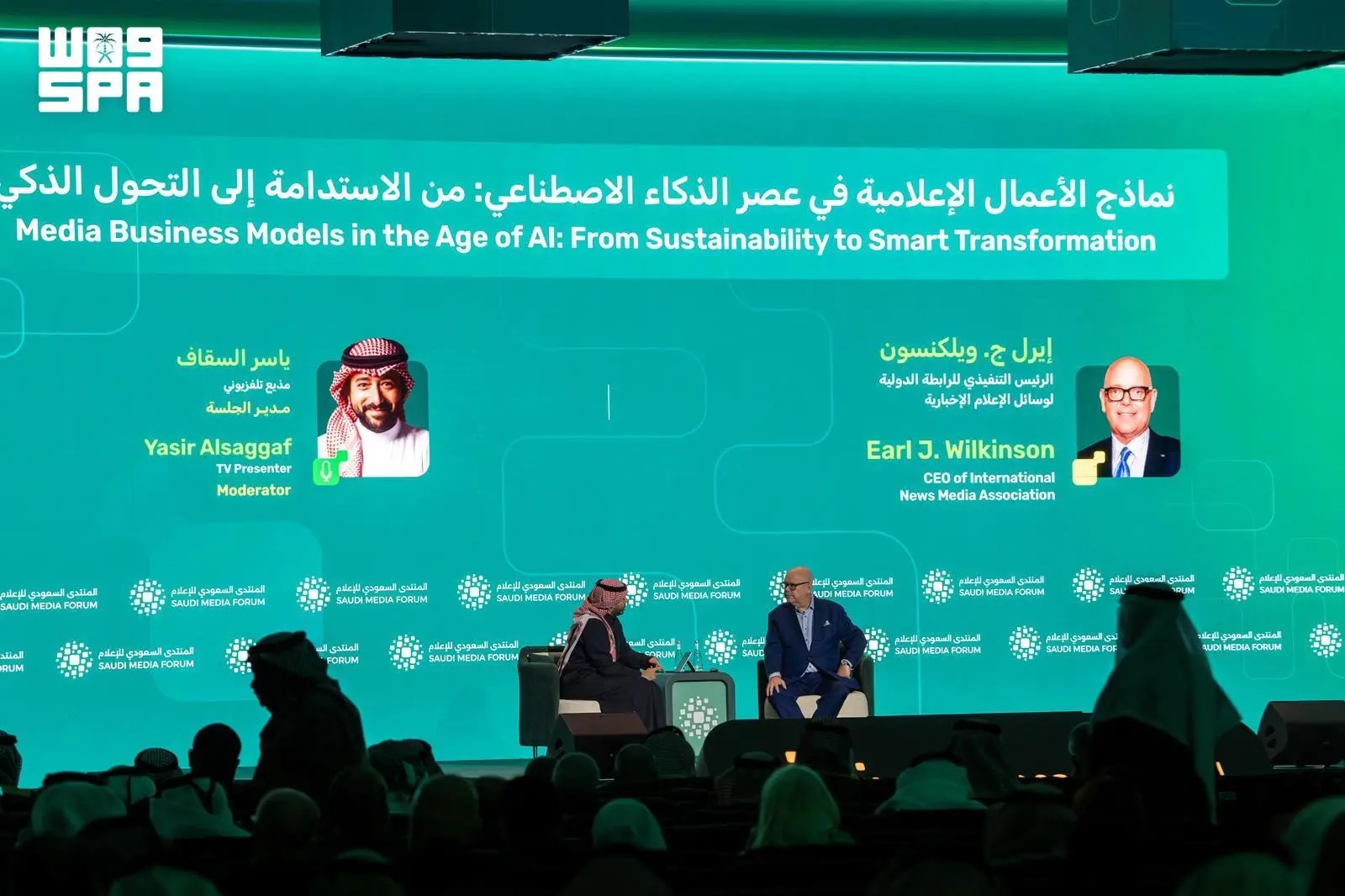
SPA Report: Media Experts Urge Human Oversight as AI Reshapes Newsrooms
Rapid advances in artificial intelligence (AI) are transforming the media landscape, moving beyond technical support to alter newsroom workflows from data gathering to immediate publication. This sweeping shift raises crucial questions regarding emerging roles in journalism and whether these applications complement reporter performance or alter traditional functions amid challenges surrounding accuracy, credibility, and ethics.
In this investigative report, the Saudi Press Agency interviewed media professionals and journalists to examine the impact of AI on media workflows, exploring emerging responsibilities and the core requirements for preserving news credibility.
AI as Supportive Tool, Not Replacement
Mohannad Al-Nuaimi, a Bahraini digital media and AI trainer, stated that AI does not present a direct threat to journalism, but rather compels a transformation in the field. He pointed out that while AI tools can process routine functions such as drafting urgent flashes, parsing large datasets, and summarizing content, they cannot replicate human editorial judgment, source development, geopolitical context, or ethical decision-making. Al-Nuaimi added that the push for speed risks promoting misleading narratives and uniform reporting that dilute distinct editorial voices.
King Saud University Media Department faculty member Mishal Al-Wael stressed that unregulated adoption poses the real threat to traditional newsroom functions, warning against reducing journalistic institutions to low-cost content distributors. He added that industry bodies increasingly advocate for transparency, active oversight, and clear human accountability.
Intisar Al-Shibliya, a producer and presenter at Oman News Agency, noted that AI significantly accelerates research, proofreading, and initial drafting, granting journalists room for in-depth analysis. However, she emphasized that over-dependence erodes critical judgment and depth, adding that factual accuracy remains the direct responsibility of human reporters.
Addressing workforce concerns, Al-Wael indicated that routine clerical tasks may be handled mechanically, but professional journalists remain irreplaceable for contextual evaluation, source cultivation, and legal accountability. He maintained that AI outputs should be treated as unverified material requiring rigorous review prior to publication.
Escalating Risks and Threats
Al-Nuaimi warned against increasing digital manipulation through synthetic media and automated bots, which can artificially steer public sentiment, sow societal confusion, and erode public confidence. He underscored that total reliance on AI tools without oversight compromises editorial policies, stressing that responsible implementation requires clear labeling, dedicated verification units, and staff training.
Al-Wael explained that deepfakes and automated accounts create security and cultural vulnerabilities far beyond simple reporting errors. He cited the “Liar’s Dividend,” where genuine materials are dismissed as fabrications, alongside the World Economic Forum’s identification of misinformation as a prime global risk. He noted that emerging frameworks, such as C2PA standards, help track digital provenance, while stressing that automated networks distort genuine public discourse.
Within news organizations, Al-Wael cautioned against allowing these tools to act as unmonitored writers, warning of factual errors, context stripping, and institutional bias that damage public trust and operational independence.
Future Outlook
Al-Nuaimi underscored that competitive advantage will continue to rest on depth and original reporting. He pointed to public-private initiatives such as Bahrain's AI Creators Lab, which trained over 5,000 regional media professionals, as examples of aligning state regulation with human capacity building.
Al-Shibliya reiterated that field experience and narrative construction remain distinct human attributes that technology cannot replace. Similarly, Saudi journalist and content creator Mishari Khalaf affirmed that AI supports his workflow through efficient preliminary sorting, comparisons, and phrasing refinement, yet requires constant cross-checking to prevent errors and preserve the author's voice.
Jordanian news trainer Jafar Al-Omari noted that while AI assists in structuring drafts, it cannot substitute for deep archival research or specialized field reporting. He added that variations across different tool tiers require cautious, selective use to maintain rigorous linguistic precision in Arabic journalism.
Ultimately, AI represents a lasting structural change across the media industry. Sustaining public confidence will rely on managing these capabilities through proactive governance, dedicated staff training, and rigorous human editorial oversight.