Royal Commission for AlUla Launches 2026–2027 Archaeology Season in AlUla and Khaybar
As part of its ongoing efforts to preserve AlUla’s cultural heritage and strengthen its position as a global center for archaeological research and knowledge, the Royal Commission for AlUla (RCU) has announced the launch of the 2026–2027 Archaeology Season across AlUla and Khaybar.
The season builds on previous years of archaeological research, excavation, documentation and conservation, reflecting RCU’s long-term commitment to studying one of northwest Arabia’s most significant archaeological landscapes.
This year’s program focuses on several key research themes, including early human presence, ancient Arabian kingdoms and oasis societies, routes of movement and pilgrimage, environmental history and water management, inscriptions and written heritage, and material culture and ways of life. These themes help connect archaeological evidence across sites, periods and disciplines, deepening understanding of how communities and civilizations lived over different historical periods.
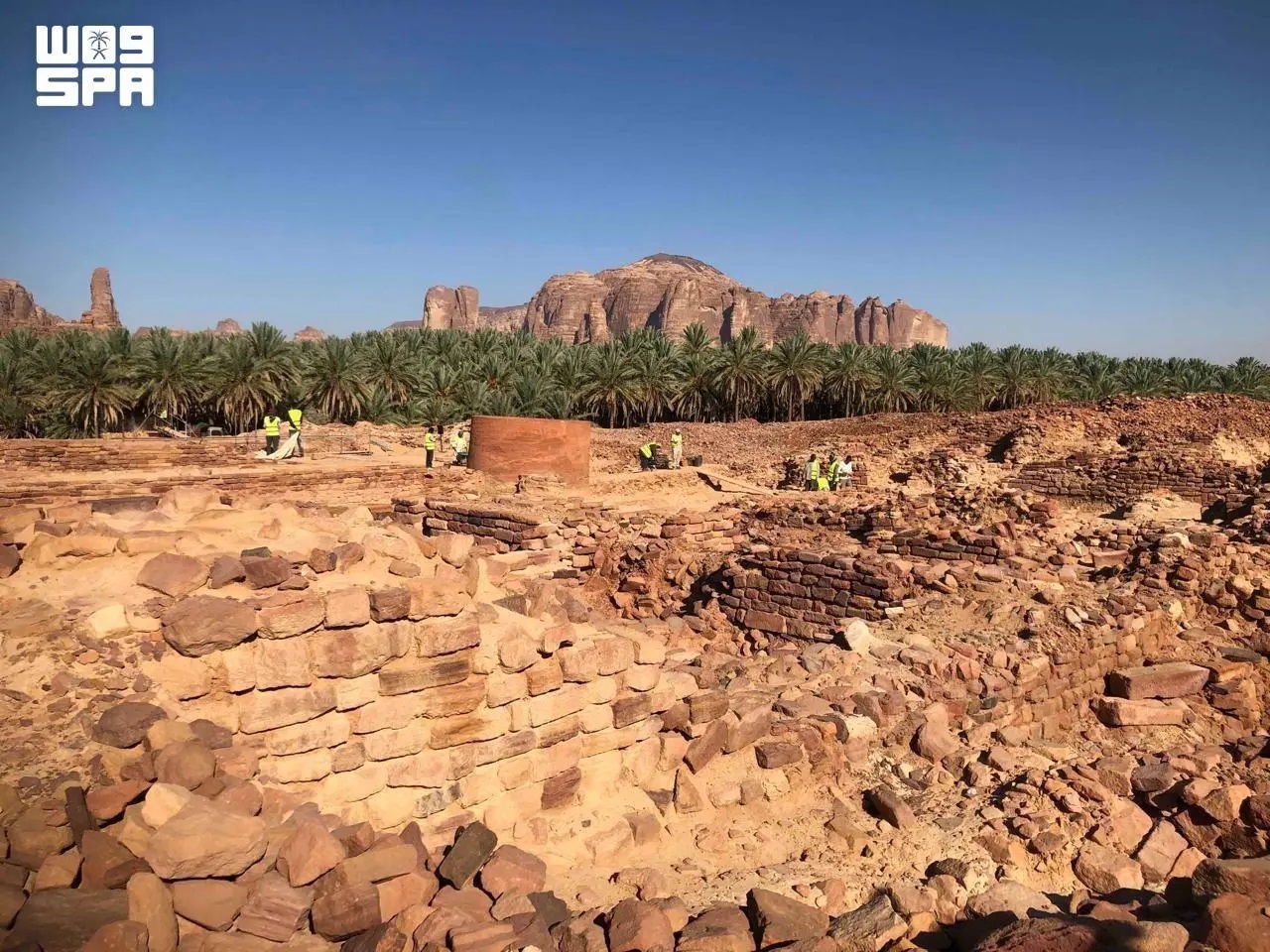
At Hegra, research focuses on the ancient settlement center, including specialist studies of plant and animal remains and archaeological finds, supporting a deeper understanding of life at the site across multiple historical periods. In Dadan, the second phase of the Dadan Archaeological Project builds on the results of the preceding five-year project, focusing on funerary and residential areas to better understand the development of one of AlUla’s most important ancient centers over time.
In Khaybar, research examines the relationship between people and the oasis across different periods, including studies of the Neolithic (New Stone Age), a prehistoric period, the history of Khaybar during Islamic periods, sedimentary records, ancient environments and the natural resources that shaped human presence and cultural change. Research into historic routes of movement in South AlUla also supports understanding of the pilgrimage and trade route landscape, including forts, railway stations and associated archaeological remains, and the travel networks that connected the region with its surroundings over time.
AlUla’s written heritage remains one of the key areas of archaeological research. More than 25,000 inscriptions have been recorded in AlUla, forming an important record of northwest Arabia’s history, languages and cultural interactions. Specialist studies also examine animal remains, ceramics, qanat water systems, oasis water management and material culture, moving beyond archaeological discoveries to develop a deeper understanding of aspects of daily life.
The season further reflects RCU’s commitment to developing Saudi capabilities in archaeology and heritage through fieldwork, laboratory analysis, specialist studies, digital documentation, community engagement and collaboration with international research institutions. These efforts support knowledge transfer and the development of Saudi expertise in archaeology and heritage. University students actively participate in fieldwork, laboratory work, specialist studies and digital documentation, mentored by Saudi and international experts from collaborating institutions. The program also includes community activities that connect archaeological research with local knowledge through practical activities, museum and laboratory experiences, and site visits involving teachers, students, Rawis and rangers.
RCU’s archaeology program forms part of its wider commitment to preserving AlUla’s cultural heritage, advancing research and knowledge, and reinforcing the position of AlUla and Khaybar as areas of rich archaeological and historical significance and centers for archaeological research, cultural exchange and heritage-led development. These efforts align with Saudi Vision 2030’s objectives to safeguard Saudi Arabia’s national heritage, promote its cultural identity and share its heritage with the world.